


The Next Question for Nutrition in Pakistan
Reflections from Amna Cheema, Program Officer with the Junaid Family Foundation, after attending the Act for Nutrition Conference, Islamabad, September 2026
Pakistan does not have a shortage of nutrition knowledge. We know maternal nutrition matters, that the first 1,000 days are critical, and that adolescent girls, social protection, and water, sanitation, and hygiene (WASH) all shape outcomes. We have policies, programs, institutions, and people who have worked on these issues for years. So the harder question is not what we know or what we should do. It is: how do we make what we know work consistently, at scale, and for the households that need it most?
That question ran through the Act for Nutrition Conference in Islamabad, which brought together government, development partners, academia, civil society, and the private sector. A common theme emerged: the conversation is moving from knowledge to implementation, projects to systems, and commitments to accountability.
A woman’s nutrition is shaped by healthcare, food access, household resources, social norms, and the quality of services around her. A child’s development is shaped not only by diet, but by clean water, sanitation, protection from illness, maternal health, and household income. Multisectoral action means bringing these systems together around the same households, with stronger links between services, data, and referrals.
Primary healthcare, community health workers, social protection, and schools already provide foundations for this. Strengthening them is often more sustainable than building parallel structures around individual projects. The private sector has a role here too, through investment, product development, and distribution, not only corporate social responsibility.
Nutritional vulnerability often begins well before pregnancy. Adolescence is part of the lifecycle of maternal and child health. Anemia, dietary diversity, education, and women’s agency all shape the conditions in which a pregnancy begins, and addressing them early is easier than reversing them later.
Counting people trained or supplements distributed is not enough. The more meaningful questions are: Who was reached? What changed for them? Was the service accessible and of good quality? Can the system sustain it? This matters more as external financing evolves, because lasting progress depends on nutrition priorities being reflected in domestic and provincial budgets and planning.
It also means telling the story behind the statistics: the cost of food, the choices a mother faces, whether a girl can reach healthcare. Communication can support change, but it cannot substitute for the systems that make healthy choices possible.
For JFF, these discussions reinforce a lesson from our own maternal nutrition work: the intervention is only one part of the equation. Its effectiveness depends on the policies, institutions, delivery platforms, and partnerships around it. The opportunity is to ask not only what more can be added, but what can be connected, strengthened, and sustained.
Progress will not be measured by how much we know about the problem. It will be measured by whether that knowledge reaches a woman, a child, and a household, and changes what is possible for them.
The Junaid Family Foundation has supported delivery of Multiple Micronutrient Supplements (MMS) for maternal nutrition in Pakistan since 2021. Engaging with the Ministry of Health and like-minded INGOs, we have successfully delivered 2.1 million bottles of MMS to women across all provinces and territories. You can read about the success of the pilot program through our publication here. For us, the next question is the same one facing Pakistan: not how much more we can deliver, but how to make sure it is connected, sustained, and reaching the women who need it most.
Recent News

JFF Visits Akhuwat College for Women in Chakwal
Akhuwat College for Women in Chakwal, Pakistan is home to more than 200 female students working towards their bachelor's degrees entirely free of charge. Tuition, housing, clothing, and meals are all covered, allowing students to focus on their studies without the...
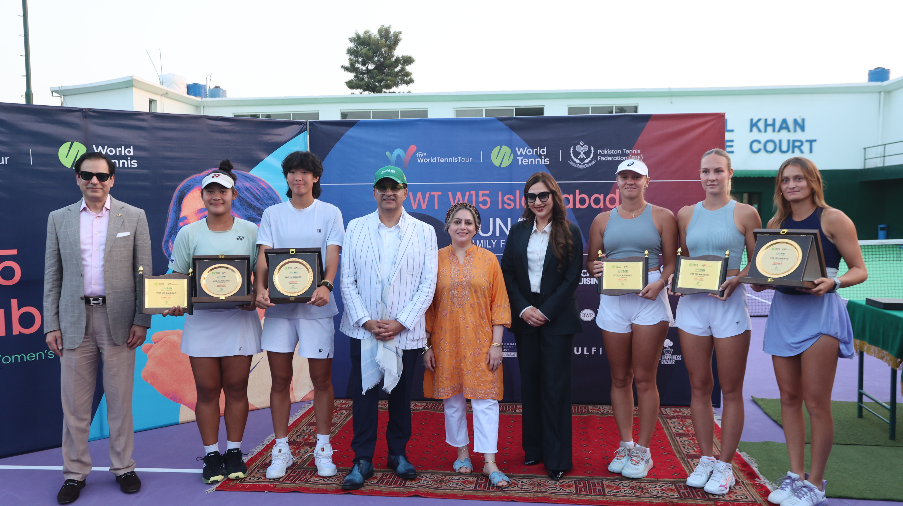
JFF celebrates Progress and Possibility in Pakistan
On Saturday, October 17th, the Junaid Family Foundation (JFF) celebrated the conclusion of the World Tennis Women's 15,000 Futures Tournament, a landmark week of women’s tennis in Islamabad that celebrated athletes from around the world and Pakistan’s rising female...

A Powerful Serve for Women’s Health
The Junaid Family Foundation (JFF) is proud to announce its sponsorship of the World Tennis (WT) Women's 15,000 Futures Tennis Tournament, taking place October 12-17 in Islamabad. The tournament marks a historic first for Pakistan; the first-ever WT women’s event...

JFF Expands Maternal Health Support Across Cleveland with Three New Grantee Partnerships
The Junaid Family Foundation (JFF) is pleased to announce the selection of three Cleveland-area organizations as grantees to expand maternal health programming: Zelie's Home, Pregnant with Possibilities Resource Center, and Partnership for Good Health. The awards...

DOME Motorsport: Racing with Purpose, Performance and Teamwork
Written by Curtis Boggs DOME Motorsport has become one of the standout teams in SRO GT4 America racing this season, combining competitive speed with professionalism, discipline, and a clear sense of purpose. Owned by Eddie Killeen, managed by Kelly Brown and...

JFF Convenes Maternal Nutrition Roundtable at World Health Assembly in Switzerland
As global health leaders increasingly shift their focus from maternal nutrition research to real-world implementation, a Cleveland-based foundation is helping convene the conversation. On May 22nd, on the sidelines of the 79th World Health Assembly in Geneva, the...

Three Years of Nourishing Tomorrow
Junaid Family Foundation (JFF) has announced the renewal of its grant to the Greater Cleveland Food Bank (GCFB) in support of the Nourishing Tomorrow program. This investment, now entering its third year, continues a partnership rooted in a simple but powerful...

From Pakistan to Cleveland: 2.1 Million Mothers Reached: Inside JFF’s Global Push to Improve Maternal and Child Health
The Junaid Family Foundation (JFF) is reinforcing its global commitment to maternal and child health both overseas and here in Greater Cleveland — demonstrating how evidence-based nutrition interventions can improve outcomes for mothers and babies across vastly...

JFF Participates in UNICEF CNF Multi-Year Partnership Workshop
At the UNICEF Child Nutrition Fund (CNF) - Multi-Year Partnership Framework Development Workshop held in Islamabad (11–12 February, 2026), Dr. Abdul Ghaffar, Senior Technical Advisor at the Junaid Family Foundation (JFF), delivered the welcome remarks, setting the...

JFF Announces Request for Proposals to Support Women’s Health in Greater Cleveland
The Junaid Family Foundation (JFF), a philanthropic organization committed to empowering vulnerable populations both locally within Ohio and around the world, announces a Request for Proposals (RFP) from relevant 501(C)3 organizations to support women’s health, with...